


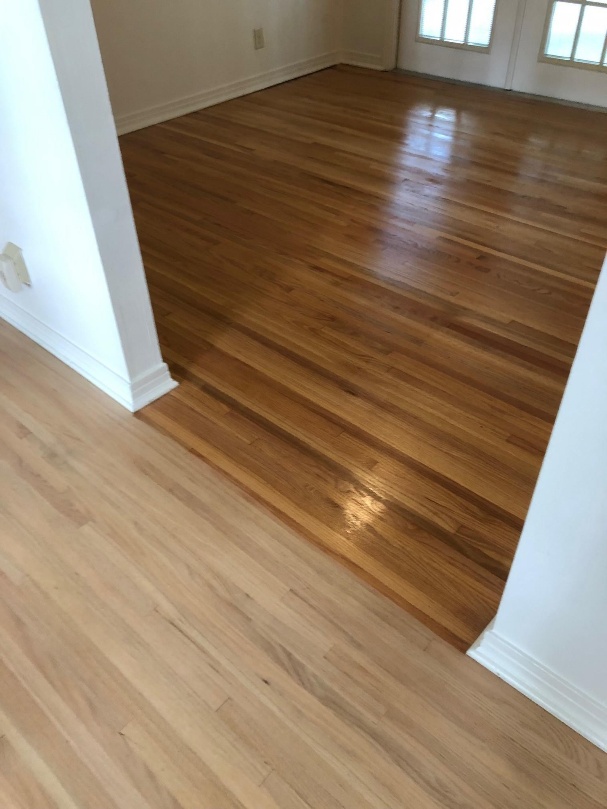
A Georgetown homeowner uncovering original oak beneath worn carpet often expects a difficult decision: replace the boards or disguise their age with a dark stain. In many cases, the flooring has more potential than it first appears. Refinishing can reveal the grain, correct years of wear, and give an older room a more current character without erasing its history.
Warm Natural Tones Are Leading the Conversation
The strongest 2026 direction is a return to warmth. Clear, honeyed finishes and light natural stains let oak, maple, and other species show their own variation instead of forcing every board into a uniform color. This approach works particularly well in older homes, where visible grain and subtle color changes contribute to the architecture.
A natural finish also gives homeowners more flexibility with furniture and textiles. Cream upholstery, walnut accents, aged brass, and patterned rugs can all work comfortably around a floor that feels warm but not overly yellow. For a broader look at species, construction, and finish considerations, Arlandria Floors’ hardwood flooring guide offers useful background before stain selection begins.
Medium Brown Brings Depth Without Overwhelming the Room
Medium brown stains remain popular because they balance practicality with visual richness. Shades resembling chestnut, walnut, or softened oak add definition to a wide living room while avoiding the heavy appearance associated with very dark finishes. They also tend to disguise everyday dust and minor marks better than nearly black floors.
The best result depends on the wood beneath the finish. Existing boards may absorb color unevenly because of age, previous coatings, repairs, or exposure to sunlight. A professional should test several samples directly on the floor rather than relying on a small showroom swatch. Homeowners considering a new installation can also compare white oak hardwood for its adaptable grain and broad range of stain responses.
Soft Greige and Smoked Finishes Suit Modern Interiors
Cool gray flooring has lost some of its dominance, but softened greige tones still have a place in design-forward homes. The updated version combines beige warmth with a restrained, weathered quality. It can complement contemporary cabinetry, limestone surfaces, and painted millwork without making the room feel stark.
Smoked effects offer another refined direction. Rather than producing a flat gray, the process subtly changes the wood’s underlying color and allows the grain to remain visible. Results vary by species and board composition, so this treatment requires careful sampling. Designers working on a renovation may appreciate the additional guidance available through Arlandria Floors’ designer program, especially when coordinating flooring with a larger material palette.
Finish Sheen Matters as Much as Stain Color
Color receives most of the attention, yet sheen strongly influences how a room feels. Matte and satin finishes are gaining favor because they reduce glare and present a more natural appearance. They also make small surface irregularities less noticeable than high-gloss coatings.
The finish should match the household’s maintenance expectations. Active homes with children, pets, or frequent entertaining may benefit from a durable coating that protects the surface while preserving a low-luster look. Before choosing a stain, ask the refinishing professional to explain preparation, board repairs, finish chemistry, drying time, and long-term care. A beautiful sample cannot compensate for inadequate sanding or an unsuitable protective layer.
Arlandria Floors has helped DC-area homeowners make informed flooring decisions since 1969, with recognition from Washingtonian Magazine and Consumers’ Checkbook. Visit the showroom on Mount Vernon Ave to compare samples in person, then schedule a free estimate for an evaluation of your existing hardwood.


