


A family in Alexandria may love the character of hardwood but worry about everyday wear. Muddy shoes, dropped toys, pet claws, and dining chairs all leave their mark. The right species helps the floor stay attractive without turning maintenance into a constant concern.
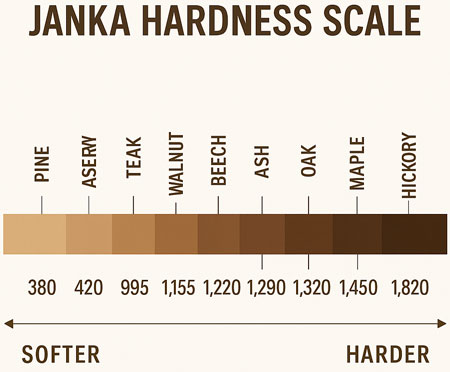
Janka hardness offers a useful starting point. The test measures how much force is needed to push a steel ball into the wood. A higher number generally indicates greater resistance to dents. It does not predict every form of wear, but it gives homeowners a practical way to compare species.
What Janka Ratings Tell You
Red oak, rated around 1,290, remains a dependable benchmark for residential flooring. White oak measures approximately 1,360 and brings a slightly tighter grain with strong design flexibility. Maple reaches about 1,450, while hickory ranks near 1,820.
Those numbers suggest that hickory will resist dents better than walnut, which typically measures around 1,010. However, hardness should not become the only deciding factor. Grain pattern, color variation, plank construction, finish, and maintenance habits all influence long-term performance.
A softer species can still perform beautifully in a carefully designed home. Walnut offers deep color and refined grain, while cherry develops a warmer appearance over time. Families should balance visual priorities with the type of activity each room receives. Arlandria Floors’ hardwood flooring information can help clarify those broader selection considerations.
Matching Species to Family Life
Active households often benefit from white oak, maple, or hickory in high-traffic rooms. White oak is especially versatile because its grain accepts a wide range of stains. That flexibility makes it easier to coordinate cabinetry, furniture, and future design changes.
Hickory delivers impressive hardness and dramatic variation. Its light and dark mineral streaks create a lively surface that can disguise small marks. The same character may feel too visually energetic for a minimalist interior, so sample boards matter.
Maple has a smoother, more understated appearance. Its dense structure suits hallways, kitchens, and family rooms, though its subtle grain may show scratches more clearly. A matte or low-sheen finish can reduce the contrast between everyday wear and the surrounding surface.
Engineered construction can also expand your choices. Its layered core offers dimensional stability during seasonal humidity changes, which matters in the DC area. Browse engineered hardwood selections when you want species variety alongside a construction designed for changing indoor conditions.
Hardness Is Only Part of Durability
A hard floor can still scratch from grit beneath furniture feet. Protective pads, entry mats, regular sweeping, and prompt cleanup often matter as much as the species rating. Large dogs and active children may benefit from textured surfaces that make minor marks less noticeable.
Finish selection changes the floor’s appearance and maintenance needs. A clear finish preserves natural color, while a tinted stain can create a more deliberate design direction. Samples should be viewed in both daylight and evening light before making a final decision.
Existing hardwood deserves evaluation before replacement. Older floors may have enough wear layer for another treatment, even after decades of use. Professional sanding and refinishing can restore original boards while preserving the character that gives older homes their appeal.
A species rating also cannot correct an unsuitable installation. Subfloor preparation, acclimation, moisture awareness, and precise fastening contribute to stability. Arlandria Floors has served DC-area homeowners since 1969, with experience that connects product selection to real home conditions. Visit our Alexandria showroom to compare samples in person.
The best selection combines hardness with design, construction, and household habits. Schedule a free flooring estimate with Arlandria Floors to discuss a hardwood species that fits your family and your home.


