


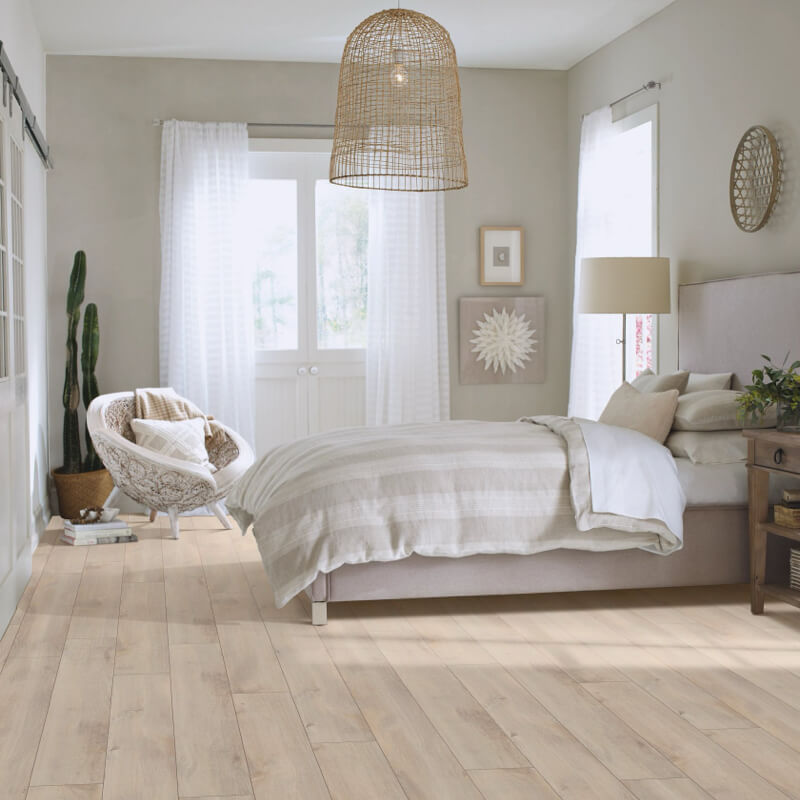
A bedroom renovation often begins with a deceptively simple question: should the floor feel soft underfoot or stand up beautifully for decades? An Arlington homeowner replacing worn flooring may picture warm carpet on winter mornings, while also wondering whether hardwood would offer stronger long-term value. Both materials can suit a bedroom, but they create very different experiences.
Carpet brings warmth and quiet
Carpet remains appealing where comfort is the priority. Its cushioned surface feels warmer during cold mornings, absorbs sound, and creates a softer landing beside the bed. That acoustic benefit can matter in upstairs bedrooms, especially when children, pets, or early risers share the home.
Fiber type and construction shape performance. Nylon generally offers strong resilience, while polyester provides color versatility and a softer feel. A dense pile tends to retain its appearance better than a loose, plush style. Browse carpet flooring selections with maintenance and traffic patterns in mind, rather than choosing by color alone.
Carpet does require more attention to spills, allergens, and gradual wear. Bedrooms usually experience less traffic than hallways, but furniture can still create crushing or uneven shading. Professional installation and a quality cushion help preserve comfort while reducing movement and visible seams.
Hardwood offers lasting design flexibility
Hardwood creates a cleaner visual line and connects naturally with adjoining rooms. It also gives you more flexibility over time because an area rug can add softness without committing the entire floor to textile. That layered approach works particularly well in bedrooms, where comfort and design both matter.
Engineered hardwood is often well suited to renovation projects because its layered construction provides dimensional stability as indoor humidity changes. Solid hardwood offers a traditional profile and substantial wear layer, making it appropriate when the subfloor and installation conditions support it. Species, width, grade, and finish will influence the room more than the word “hardwood” alone.
Maintenance is straightforward: use felt pads, remove grit promptly, and follow the manufacturer’s cleaning guidance. Unlike carpet, hardwood does not trap dust in the same way, and its appearance can evolve gracefully with thoughtful care. A well-selected floor may remain relevant through several bedroom updates.
Comfort does not have to mean wall-to-wall carpet
Hardwood can feel welcoming when paired with the right rug, especially beside the bed. A custom-size rug defines the sleeping area, softens footsteps, and introduces pattern or color without limiting future design changes. Binding also gives unusual room dimensions a more polished result.
For a bedroom suite connected to a bathroom or lower-level space, waterproof luxury vinyl may provide a practical transition. It offers a resilient surface for moisture-prone areas while allowing the bedroom to retain a more natural hardwood aesthetic. Keeping each material in the room where it performs best often creates a more cohesive plan than forcing one product throughout the home.
The right decision depends on how you live
Choose carpet if warmth, quiet, and a cushioned feel lead your priorities. Choose hardwood if longevity, visual continuity, easier surface cleaning, and future design flexibility matter more. Budget, allergies, pets, subfloor conditions, and plans to stay in the home should also guide the decision.
Arlandria Floors has helped DC-area homeowners weigh these tradeoffs since 1969. Our hardwood flooring guide explains construction and care considerations that can make the selection process more precise.
A flooring consultation can clarify which material fits your bedroom, adjoining spaces, and long-term plans. Visit our showroom on Mount Vernon Ave in Alexandria or schedule a free estimate with Arlandria Floors to get started.


