


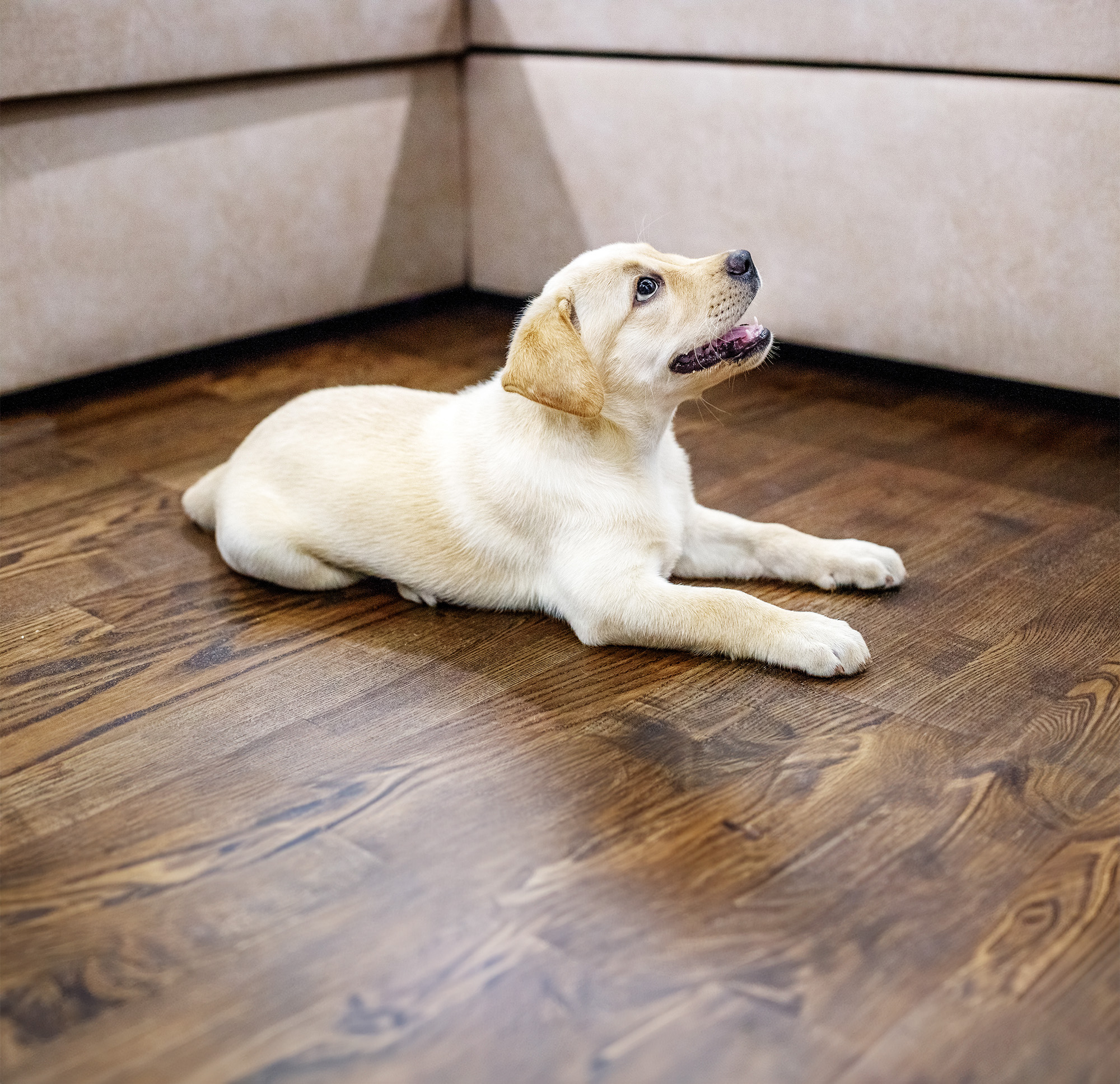
Anyone who shares a condo or townhome with a dog knows the sound. Nails tap across the floor at 6 a.m., toys skid down the hallway, and every quick turn seems louder in a tighter footprint. In older homes especially, flooring affects more than style. It shapes how calm the space feels day to day.
Why quieter flooring matters in attached homes
Noise travels differently in condos and townhomes than it does in detached houses. Footfall echoes through open living areas, and hard surfaces can amplify every sprint to the front door. That does not mean you need to give up a clean, durable floor. It means you need to pay closer attention to what sits underfoot, how the material is built, and how it handles daily wear from pets.
That is one reason many homeowners in Alexandria start with rigid-core LVP. Its layered construction helps soften sound more than older, thinner hard-surface products, while still standing up to claws, water bowls, and muddy paws. If your goal is a floor that feels more forgiving in a shared-wall setting, the structure matters as much as the color.
What pet owners should look for in luxury vinyl
Not all luxury vinyl performs the same way. Some products are better at masking small scratches, while others are built to resist dents and everyday moisture. For homes with pets, the most useful features are textured surfaces, strong wear layers, and a stable core that reduces hollow-sounding movement underfoot.
A good place to compare those practical features is the selection of pet-friendly luxury vinyl. Many homeowners also prefer waterproof luxury vinyl in entry areas, kitchens, and lower levels, where wet paws and spilled bowls are part of the routine. The real advantage is not just durability. It is peace of mind. You spend less time worrying about every scratch or splash.
Style still matters, of course. In tighter homes, a wood-look plank often creates visual continuity from room to room, which helps the layout feel larger and more settled. LVP has become popular for that reason in places like Arlington and Falls Church, where homeowners often want a quieter floor without the maintenance demands of softer materials.
Where hardwood still fits into the conversation
Luxury vinyl solves a lot of practical problems, but it is not the answer for every room. Some homeowners still prefer the character and long-term value of hardwood in main living spaces or bedrooms. In those cases, it helps to think in zones rather than forcing one material through the whole home.
If you love real wood upstairs or in formal spaces, browsing engineered hardwood can help you compare looks that pair well with quieter surfaces elsewhere. Engineered construction is often a smart fit in attached homes because it offers design flexibility and works well in spaces where seasonal conditions need to be considered. Arlandria Floors often helps clients build a balanced plan: hardwood where warmth and authenticity matter most, and LVP where pets, moisture, and sound control matter more.
That mix also makes design sense. A softer-toned vinyl in the kitchen or lower level can connect beautifully to wood in adjacent rooms, especially when the palette is chosen with the whole home in mind.
The right floor is the one that supports real life
Flooring decisions in Georgetown, older Alexandria properties, and similar urban homes usually come down to one question: what will make daily life easier without making the home feel overly utilitarian? Quiet, resilient flooring answers that question well. It reduces stress, holds up to pet traffic, and keeps your rooms looking composed instead of constantly in recovery mode.
Arlandria Floors has been helping DC-area homeowners make those judgment calls since 1969. If you want guidance tailored to your layout, visit our Alexandria showroom or request a free flooring estimate to start planning a floor that feels quieter, tougher, and better suited to the way you live.


